How To Compare Options For A Compact Bedroom Storage Reset For A Rented Flat
A practical step-by-step guide to how to compare options for a compact bedroom storage reset for a rented flat, including preparation, instructions, common issues, tips, and next steps.
How To Compare Options For A Compact Bedroom Storage Reset For A Rented Flat
This guide helps renters reset a compact bedroom storage system without breaking a lease or damaging the space. It focuses on comparing options by measuring limitations, prioritizing function over style, and using temporary fixes. The process covers assessing constraints, thinking about daily habits, weighing modular versus single-piece furniture, using vertical space, and updating lighting. The goal is a calm, efficient room that feels fresh while protecting a security deposit. The guide is practical and uses simple language so anyone can follow it, even if they have never tackled a storage project.
Fast Answer
- Measure your room and identify immovable features first; this prevents buying pieces that don't fit or block access.
- Compare storage options by listing your daily items and their use frequency, then choose pieces that match those habits without sacrificing walking space.
Before You Start
- Take detailed measurements of the room's length, width, and ceiling height, plus the depth and height of any alcoves, doors, or windows.
- List every item you need to store in the bedroom, noting which ones you use daily, weekly, or rarely.
- Sketch a simple floor plan on paper, including the location of the bed, the door swing path, and any existing built-in fixtures.
- Check the lease or ask the landlord about rules for wall mounting, painting, or adding new fixtures to avoid deposit losses.
Step-by-Step Instructions
Assess Your Room's Limitations
Begin by measuring the room's length, width, and ceiling height with a tape measure. Also measure the depth and height of any alcoves, under-window areas, and the opening of doors and closet. Write these numbers on a notepad or a phone note. Next, identify immovable features like the door swing arc, radiator, light switch, and any built-in shelf. This tells you the true available floor and wall space. The check is to stand in the room and imagine walking from the door to the bed without obstruction. You should have at least a clear path of roughly two feet (60 cm). These checks matter because they prevent you from buying a storage piece that blocks the door or forces you to squeeze past it daily. A precise map of the room also helps you compare different storage options logically, because you can see whether a tall unit or a low profile will actually work. Finally, note any sloped ceiling or weird corner that might make a standard unit useless. This step saves you from expensive mistakes.
List What You Actually Store
Collect every item that you currently keep in the bedroom, from clothes and shoes to books, electronics, and off-season bedding. Sort them into three groups: daily use, weekly use, and occasional use. Daily items might include the clothes you wear most, phone charger, and glasses. Weekly items might be sports gear or certain accessories. Occasional items are things like winter coats or keepsakes. Write these groups on a sheet of paper or a digital note. After you inventory, count how many items are in each group and note their sizes. The check is to ask yourself which four or five items you touch on a typical morning, and then make sure your future storage puts those within easy reach. This matters because storage isn't just about containing stuff; it's about making your routine smooth. When you know what you use daily, you can compare storage options by looking at drawer counts, open shelves, and hanging rods. You might discover that you don't need a huge dresser, but you do need a small charging station. You can also decide which items can live in boxes under the bed, because you rarely need them.
Decide on Modular or Single-Piece
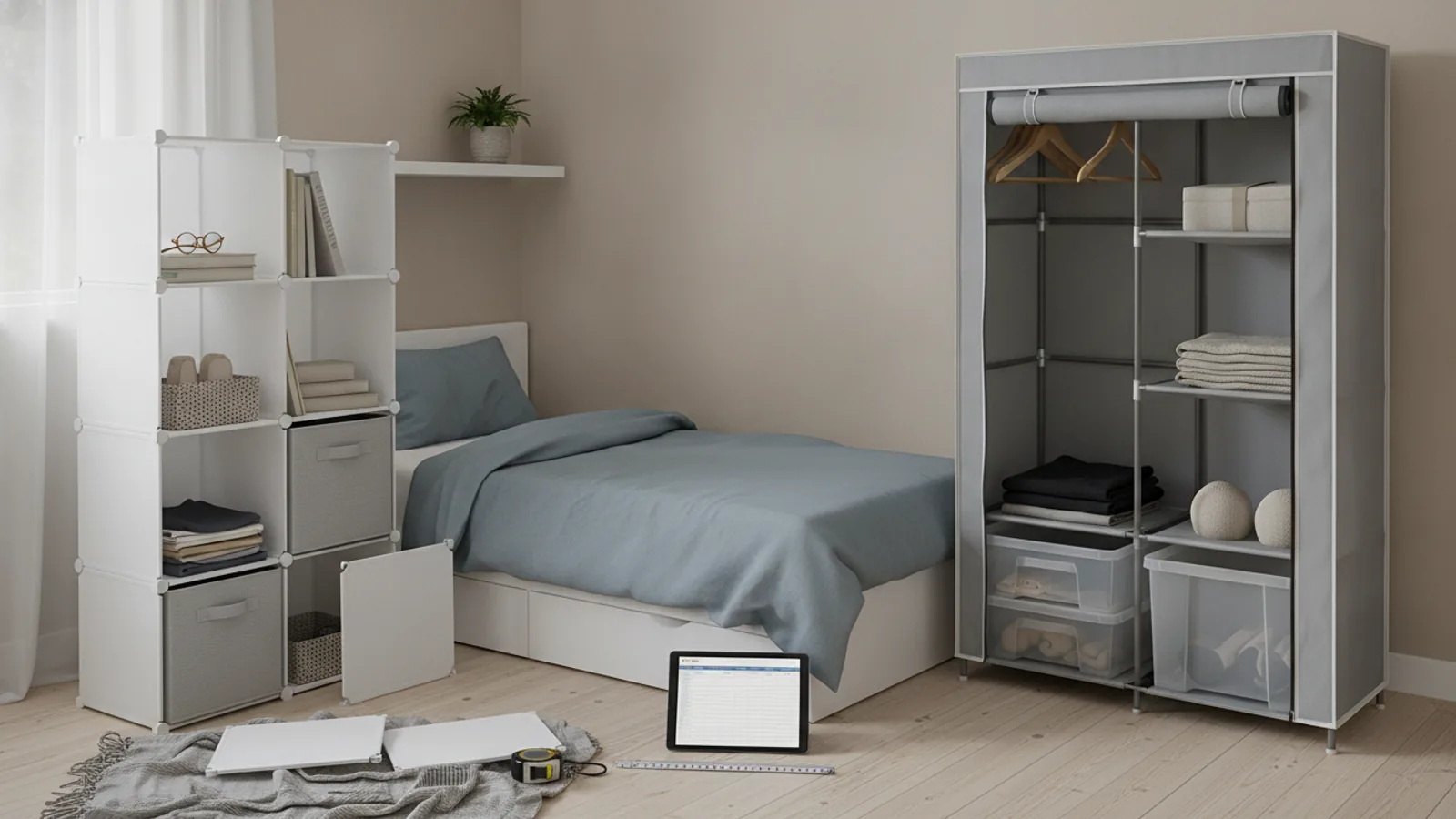
Now that you know your measurements and your items, compare two broad storage approaches: modular units (stackable cubes, shelves, or bins) versus single-piece furniture like a wardrobe, dresser, or bookcase. Modular pieces give you flexibility because you can expand or reconfigure them later, and they often fit odd spaces better. Single-piece units can look sleeker and might offer more storage in a smaller footprint, but they are harder to adapt if your needs change. To compare, sketch your room plan again and place each option into that drawing. Fill each unit with your item list to see if everything fits without overcrowding. The check is to imagine a month from now: will this option still meet your needs if you acquire a few new items? This matters because a compact bedroom is a balancing act. A modular cube tower might be easier to fit around a corner, but a single-piece armoire might give you more hanging space. Also check that any unit you choose has a solid back and can be anchored to the wall to prevent tipping, especially in a rental where you cannot alter the structure. Choose the option that provides the most usable storage for the least visual clutter.
Use Vertical Space Up High
In a compact bedroom, the floor is precious, so look upward. Evaluate the empty wall space above the bed, over the door, and near the ceiling. Think about adding wall-mounted shelves or a hanging rod that hooks over the top of the door. Compare these with a tall bookcase that reaches near the ceiling. To compare, measure the height of items you need to store and then determine how high you can comfortably reach or what you can use a step stool for. The check is to imagine storing items you rarely use on the top shelf, and everyday items on lower shelves. This matters because you always want to take advantage of vertical space that would otherwise be wasted. For example, an over-the-door shoe organizer can hold scarves, belts, and small accessories without taking floor space. A wall shelf above the bed can hold books and a lamp. However, you must check the wall material in a rental: drywall on a stud can support more weight than plaster, and you may need permission to drill. If the wall is not suitable, consider a tall but narrow shelving unit that rests on the floor and uses a safety strap.
Think About Daily Flow
Place your storage in a way that matches the order of your morning and evening routines. For instance, put a small tray or dish on a nightstand for your phone and watch. Place a hamper near the bed or the door for dirty clothes. Use a bedside table with drawers or shelves for things you read at night. Compare a bed frame with built-in drawers, a headboard with shelving, and a simple under-bed box. The check is to walk through your typical morning: wake up, choose clothes, get dressed, and put on shoes. Where do you need each item? This matters because storage that is far from its point of use will be ignored, and you will fall back into piles on the floor. You can also compare a small coat hook on the back of the door versus a floor-standing valet stand. Decide which zone is for which activity: dressing, sleeping, or working. Make sure there is a clear path to the bathroom. The flow should be easy, not obstructed. This step confirms that you are not just storing items but also improving your daily life.
Lighting and Final Tweak
After you arrange your storage, improve the lighting to make the space feel bigger and more welcoming. Compare a bedside lamp, a floor lamp, and wall-mounted sconces. Evaluate the existing overhead light and how it casts shadows. The check is to sit on the bed and turn on each light to see if any corners remain dark. If so, add a small battery-powered puck light or a clip-on LED that runs on batteries, avoiding risky wiring. This matters because a compact room can feel cramped if it is dimly lit, and good lighting helps you see your stored items clearly, reducing the urge to rummage. You might also consider using under-shelf lighting to illuminate cubes or shelves. In a rental, avoid changing the existing light fixture unless you have permission. Instead, use plug-in or battery lights that can be removed easily. Finally, step back and look at the room from the door. Does the storage make sense? Are there any clear pathways? Adjust the position of storage units so they do not interfere with door swings or drawer openings. This final check ensures comfort and safety.
Quick Reference
| Situation | Action | Why it helps |
|---|---|---|
| You find a storage unit that fits the room width but is too deep for a narrow hallway. | Measure the hallway and doorways first. If the path is narrow, choose a shallower unit or assemble it near the room. | Avoids the frustration of paying for a piece that cannot be transported through the flat. |
| You have more clothes than hanging space in the existing closet. | Use a garment rack on wheels to store off-season items, or add a second rod using a tension rod inside the closet. | Creates additional hanging capacity without permanent installation, respecting the lease. |
| You need to store rarely used items but want them out of sight and out of the way. | Place them in clear plastic bins under the bed or on the top shelf of a tall bookcase. | Keeps clutter low and makes these items accessible when needed, ideal for small spaces. |
Common Issues
- The room feels even more cramped after adding storage because the unit is too bulky.: Switch to modular units with a smaller footprint, or use wall-mounted shelves to free up floor space. Always re-measure the unit's depth and compare it to the walking path.
- You cannot find a storage piece that fits under a sloped ceiling or an unusual angle.: Use custom-sized wire shelving or adjustable closet systems that can be cut to fit, or create your own with wooden boards and brackets (if the lease allows).
- The storage unit tips over when you pull out a drawer because it is top-heavy.: Secure the unit to the wall with a safety strap, and place the heaviest items in the bottom drawers. If strapping is not allowed, choose a low, wide unit instead.
Advanced Tips
- Use vertical drawer dividers inside existing drawers to double the storage of small clothes and accessories.
- Install a wall-mounted fold-down desk that doubles as a nightstand to save floor space while allowing a workspace.
- Consider a bed with built-in drawers underneath that are on casters, so you can roll them out for easy access.
Final Checklist
- Confirm that every new storage piece is easy to move and does not block the door or window.
- Secure all tall furniture to the wall to prevent tipping, using a kit that will not leave lasting damage.
- Place a small tray or dish on a bedside surface to catch daily essentials like keys and glasses.
- Take a final photo of the room to compare with your original sketch to see if you have achieved a calmer, more open feel.
FAQ
What is the best way to fix a storage problem in a rented bedroom?
Start by measuring the room and understanding your daily habits. Use furniture that is freestanding and modular, such as cubes or a low dresser. Always prioritize clear paths and safe placement. You can also use wall-mounted shelves if the wall allows without damage.
How can I avoid damaging walls when adding shelves in a rental?
Use tension rod shelves or freestanding shelving units that lean against the wall without screws. If you must drill, ask for permission and use spackle or putty to patch small holes. Alternatively, use over-the-door hangers and command hooks that can be removed cleanly.
Is it better to buy storage that can be reused after moving?
Yes, because it saves money and reduces waste. Modular shelf units, storage bins, and simple bookcases can fit into different spaces in a future home. Choose neutral colors and basic shapes that work in any room.