What To Check Before Choosing A Compact Bedroom Storage Reset For A Rented Flat
A practical step-by-step guide to what to check before choosing a compact bedroom storage reset for a rented flat, including preparation, instructions, common issues, tips, and next steps.
What To Check Before Choosing A Compact Bedroom Storage Reset For A Rented Flat
Before you buy or install any compact storage unit in a rented flat, you must verify the physical layout, understand your lease restrictions, measure precisely, and plan around the landlord's rules. This guide gives you a clear, step-by-step process to choose a reset that fits your space, protects your deposit, and avoids conflict with your landlord or housemates.
Fast Answer
- Check your lease for clauses about wall mounting, drilling, or making permanent changes; if uncertain, ask the landlord in writing.
- Measure your room's width, height, and depth at the exact spot where you plan to put the storage, and also measure doorways and corridors to ensure the unit can be moved in.
Before You Start
- Locate your lease agreement and highlight every sentence about alterations, fixtures, or furniture you are allowed to attach to walls or floors.
- Get a laser measure or a metal tape measure and record the floor dimensions, ceiling height, and the width of every doorframe along the path from the entrance to the chosen wall.
- Take clear photos of the empty wall or alcove where you want the storage, and note any existing sockets, switches, pipes, or skirting boards that could conflict.
- List your actual storage needs by categorizing items you keep in the bedroom, such as clothes, shoes, books, bedding, or hobby gear, and decide which items must stay in the room.
Step-by-Step Instructions
Read Your Lease and Note All Restrictions
Start by reading your lease or tenancy agreement from beginning to end. Look specifically for any clause that mentions 'alterations', 'fixtures', 'furniture', or 'drilling'. Many leases require you to get written consent before making holes in walls, even small ones. If the document says that the property must be returned to its original condition, that means you will likely have to fill, paint, and possibly repair any damage before you move out. Also, check whether the lease restricts the total weight of furniture or forbids blocking a fire escape, window, or radiator. Write down the exact wording for these clauses and keep them in a notes file. If the lease is silent, that does not give you free rein – you should still ask your landlord for explicit permission in writing. Your landlord may agree but with conditions, such as using a specific type of anchor or hiring a professional. Knowing these rules first prevents financial loss or a damaged relationship. Based on what you find, you can decide whether a freestanding unit is safer than a wall-mounted one, or whether you need to buy a unit that stands alone and does not attach to the walls.
Measure the Exact Installation Spot
Use a laser measure or a rigid metal tape to measure the width, height, and depth of the exact wall or niche where you plan to place the storage unit. Do not use your eye or an old furniture dimension as a guide. Write the numbers down with the unit in centimeters and inches. Then, measure the distance from the floor to the ceiling, and check whether there is any baseboard, skirting, or crown molding that could reduce the usable width. Also check for electrical outlets, light switches, or vents that you must not block. If you are considering a floor-to-ceiling unit, ensure that your ceiling height is not too low or too high for standard models. Also measure the doorway of the room, the hallway, and the front door to confirm that the unit can physically be carried through. If you plan to assemble it inside the room, still measure the door widths because the unit may come in panels that need to fit through. Take a photo of the wall with the measuring tape in place so you have a record. Doing this carefully now will prevent you from buying something that does not fit, which is a common and costly mistake.
List Your Storage Needs and Priorities
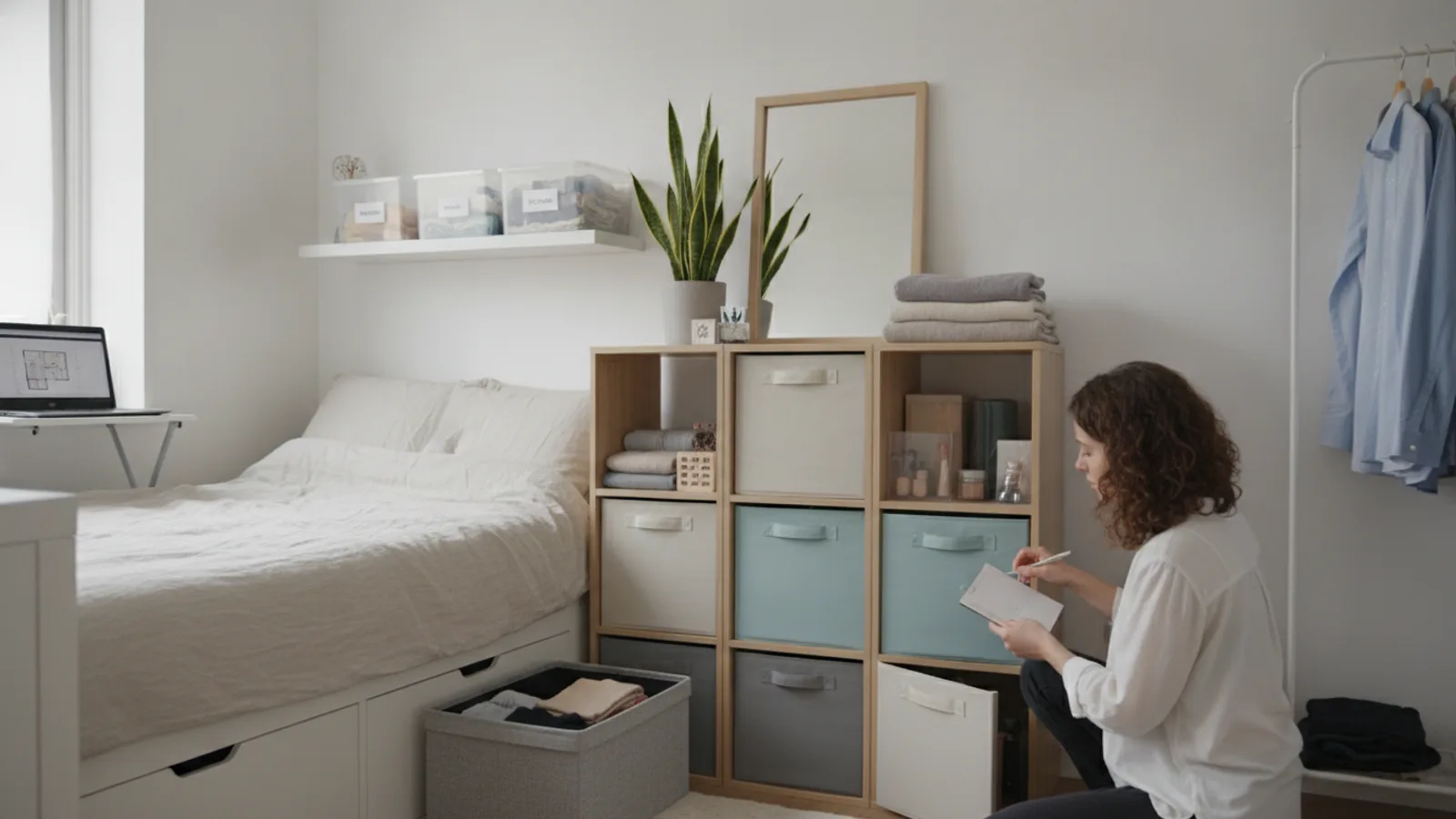
Create an inventory of every item you actually need to store in the bedroom. Go through your closet, under the bed, and any boxes you have kept. Categorize items into groups such as hanging clothes, folded clothes, shoes, accessories, bedding, electronics, paperwork, and nostalgia. Now decide which categories must remain in the room and which could be moved to a cupboard or common area. For each group, estimate the volume in liters or the approximate number of items. For example, if you have fifty shirts, you need about two meters of hanging rod, but if you have bulky winter coats, you need deeper shelves. Also consider how often you need to reach each item. Items you use daily should be at eye level, while seasonal items can be on higher or lower shelves. This list will guide the type of unit you need: a wardrobe, a shelving unit, a chest of drawers, or a combination. If you already have some storage but it is inefficient, think about what type of reset would improve the flow. Do not buy a bigger unit just to have extra space; instead, match the unit to your actual stuff. This step saves money and reduces clutter.
Check Your Landlord's Permission in Writing
Once you know what kind of storage you want, contact your landlord or property manager and ask clearly if you can install it. Send an email or a written message that describes the unit: its dimensions, whether it is freestanding or wall-mounted, and whether you will drill holes. Ask for explicit written permission, and do not accept a verbal okay. If you do not have an email address, ask for a postal address or use a secure messaging service. Explain that you will remove the unit and repair any damage upon moving out, if that is acceptable. If the landlord says no, ask what alternatives are allowed. Some landlords prefer you to use existing furniture or to place protective mats under heavy items. If the landlord agrees, keep a copy of that written consent in a safe place, because you may need it at the end of your tenancy. If you mount a unit without permission, you risk losing your security deposit or facing a fine. Even if the unit is a freestanding bookshelf, the landlord might require it to be secured to the wall for safety, so always ask. This step protects you legally and prevents misunderstandings.
Choose Between Freestanding and Wall-Mounted Units
Now that you have permission and measurements, decide whether the unit will be freestanding or attach to the wall. Freestanding units, such as open shelves or cabinets with a solid base, are easier to remove and cause no damage. However, they may be less stable if pushed, so you might need to use furniture straps or anti-tip brackets, which often require drilling or they may not be allowed in a rental. Wall-mounted units save floor space and feel more built-in, but they require strong anchors that may damage the wall. In a rental, you must choose the solution that your lease allows and that you can reverse. If you are allowed to drill, use proper wall anchors suitable for the wall material (concrete, plaster, or drywall) and always check for hidden pipes or cables with a stud finder. If you are not allowed to drill, look for tension-based shelving that fits between the floor and ceiling, or a tall yet narrow cabinet that stands alone. Also think about the weight of what you will store; heavy books or appliances need a robust unit. The right choice balances safety, ease of removal, and the look you want.
Plan the Move and Assembly Order
Before you buy, think about how the unit will arrive and how you will build it. Check that the delivery method will not damage the building's hallway, and if you need to ask the building manager for a service elevator or a time slot, do that in advance. When the unit arrives, bring it into the room as far as possible, then unpack the boxes and lay out the parts on a soft surface. Read the manual completely, and note which side should face the wall. Start assembly on the floor with a soft blanket to avoid scratches. Follow the order of pieces: usually the frame, then the shelves, then the back panel, then the doors. Do not over-tighten screws if you will need to disassemble later. As you build, check that all components are level and that the unit does not lean. Once assembled, push it gently to see if it is stable. If there is a risk of tipping, use the anti-tip kit, but only if it does not require permanent changes. If the unit is tall, install it in a location where it will not obstruct a window or door, and allow access to sockets and switches.
Quick Reference
| Situation | Action | Why it helps |
|---|---|---|
| You want a floor-to-ceiling wardrobe but your ceiling is sloped. | Choose a modular shelving unit with adjustable legs or buy a freestanding cabinet that is a few centimeters shorter than the lowest point and use a valance to cover the gap. | A fixed wardrobe will not fit a sloped ceiling, but a modular unit can adapt to the exact height and prevent wasted vertical space. |
| Your landlord refuses any wall drilling but allows free-standing furniture. | Purchase a tall cabinet with a wide, solid base and use rubber non-slip pads under the feet; then place the heaviest items on the bottom shelf to lower the center of gravity. | Without wall anchoring, a wide, heavy base reduces the risk of tipping, and the pads protect the floor from scratches. |
| The storage unit must go near a radiator or a heat vent. | Leave at least thirty centimeters of clearance between the unit and the heat source, and do not store flammable items, such as aerosols or candles, in that area. | Blocking airflow can overheat the radiator or cause a fire hazard, so maintaining clearance ensures safety and allows even heating in the room. |
Common Issues
- The unit fits when assembled, but the door cannot open fully because it hits the doorframe.: Measure the clearance needed for the door to swing and choose a unit with a shallower depth or sliding doors. Alternatively, position the unit so that the door opens into an open area, not towards a wall.
- You installed a wall-mounted shelf and now there are unsightly holes in the plaster.: Before drilling, check the wall type and use the correct anchor. If you already made holes, fill them with quick-setting joint compound, sand smooth, and repaint with the original wall color to restore the surface.
- The unit is heavy and stable, but it blocks a light switch or an outlet.: Before final placement, measure the location of every switch and outlet. If the unit already blocks one, you can relocate the unit slightly, or if that is not possible, ask the landlord if you can use an extension cord (for outlets) or a remote-control switch (for lights), but always get permission.
Advanced Tips
- Use high-quality, pyramid-style felt pads under each foot of the unit to make it easier to slide when you need to clean behind it, but always lift slightly to move to avoid scratching the floor.
- If you are allowed to drill, install a sturdy plywood backing board painted to match the wall, so you can mount shelves or hooks without affecting the actual wall surface; remove the board and patch only small holes at the end.
- Look for storage units that have leveling feet, as they allow you to adjust the height to compensate for uneven floors, which is common in older rented flats.
Final Checklist
- Have you read your lease and received written permission for any mounting or heavy furniture?
- Does the storage unit fit through all doorways and into the room, with enough clearance for opening doors?
- Will the unit be placed away from heat sources, electrical panels, and safety exits?
- Do you have a plan to reverse any changes and restore the wall to its original condition at the end of the tenancy?
FAQ
Can I install a wall-mounted shelf if my lease says no drilling?
No, installing a wall-mounted shelf that requires drilling is a violation of the lease. You must seek written permission first. If the landlord refuses, consider freestanding shelves or tension rods that do not leave holes.
What if my landlord says I can 'do anything' but does not confirm in writing?
Do not proceed without written consent. An oral agreement is not enough. Send a polite email summarizing the permission you think you received and ask the landlord to reply 'confirmed'.
How do I know if a storage unit is too heavy for the floor of my rented flat?
Check your building's general guidelines, but a safe rule is to distribute the weight evenly. If you have a wooden floor, avoid concentrating too much weight on a small area. Place the unit perpendicular to floor joists or spread the load with a wide, flat base.