A Practical Guide To A Weekly Home Reset That Makes Everyday Rooms Easier To Use
A practical step-by-step guide to a practical guide to a weekly home reset that makes everyday rooms easier to use, including preparation, instructions, common issues, tips, and next steps.
A Practical Guide To A Weekly Home Reset That Makes Everyday Rooms Easier To Use
A weekly home reset is a short, repeatable session that clears the small messes that build up during busy days, restores order to high-use rooms, and sets up the house for easier daily living. Instead of deep cleaning, the reset focuses on returning each room's surfaces, floors, and essential tools to a usable state so you can find things quickly, move through your morning routine without obstacles, and feel calmer at home. This guide walks you through a simple six-step process that takes about 60 to 90 minutes, starting with gathering supplies, then working through the entryway, kitchen, bathroom, main living area, and finishing with a quick floor sweep. You'll also get practical tips for troubleshooting common issues, expert-level ideas for customizing your reset, and a final checklist to keep you on track. By committing to a weekly reset at the same time each week, you'll reduce clutter, save time during the week, and make every room more functional for the people who use it.
Fast Answer
- Set a recurring 60-minute timer on your phone for a consistent day and time each week, such as Sunday afternoon, then walk through each high-use room with a laundry basket, a cleaning wipe, and a trash bag, putting away stray items, wiping down main surfaces, and collecting trash or recyclables.
- Focus on the rooms where you spend the most time: the kitchen, bathroom, entryway, and main living area. Reset surfaces, clear paths of clutter, and do a quick floor sweep so that each room feels ready for the next week.
Before You Start
- Set a weekly appointment in your calendar, like Sunday at 4 p.m., and treat it as a non-negotiable commitment, just like a work meeting or a class, so it becomes a natural habit.
- Gather a simple supply caddy with all-purpose cleaner, microfiber cloths, a scrub brush, glass cleaner, trash bags, and a laundry basket for misplaced items.
- Take a quick 5-minute walk through your home before you start, noting the three biggest trouble spots (like a pile of mail on the counter or a cluttered bathroom vanity) so you can prioritize them.
- Have a small tray or dish near the front door for keys, sunglasses, and wallet, and label a bin or basket for items that belong elsewhere, so you can sort quickly during the reset.
Step-by-Step Instructions
Gather Your Supplies and Set the Timer
Before you touch a single item, gather your cleaning caddy, trash bags, and a laundry basket, then set a timer for 60 minutes on your phone or a kitchen timer. This simple act of preparation tells your brain that this is a focused work session, not an open-ended chore. Place the caddy in a central spot like the kitchen counter, and confirm that you have fresh cleaning cloths and enough trash bags for each room. Walk to the front door and place the laundry basket there, because you'll use it to collect items that belong in other rooms. Check that your timer is visible from most rooms, or wear it in a pocket. This step matters because it creates a clear boundary: you know exactly how long you'll work, and you have everything you need within reach, so you won't waste time searching for supplies later. It also prevents the common trap of starting in one room and then getting distracted by a missing spray bottle.
Reset the Entryway and Mudroom
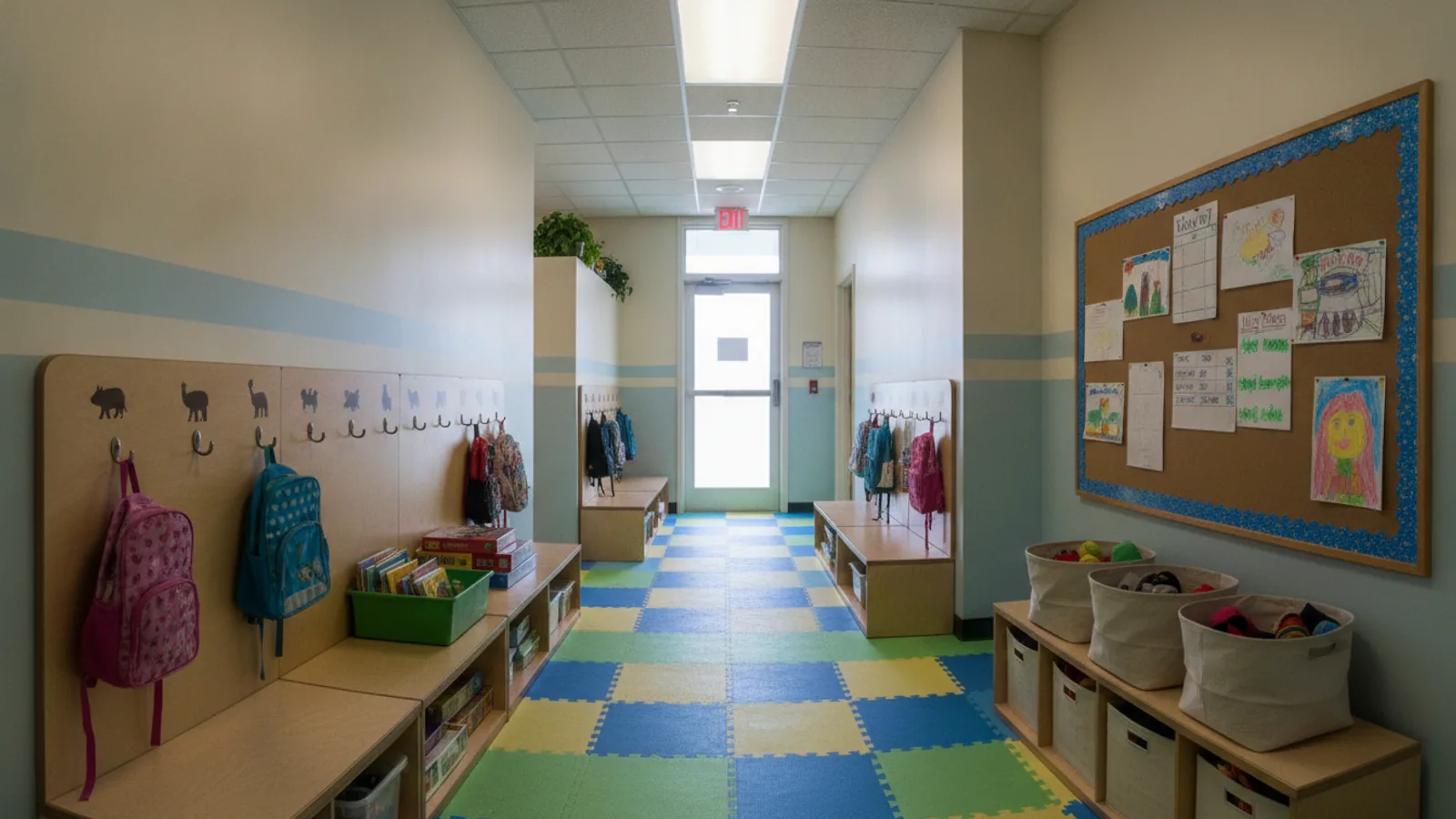
Start at the front door because it sets the tone for the whole home. Take the laundry basket and walk through the entryway, picking up shoes, jackets, bags, mail, and any other items that don't belong near the door. Put away shoes in the shoe rack or closet, hang jackets on hooks, and place mail in a tray or recycle bin. Wipe down the door handle, light switch, and any bench or console table using a microfiber cloth and all-purpose cleaner. Use a damp cloth to clean any scuff marks on the walls or baseboards. Finally, sweep or vacuum the entryway floor to remove dirt and grit that gets tracked in. Check that the area feels open and welcoming: you should be able to walk in, put down your keys, and slip off your shoes without stepping over clutter. This reset matters because the entryway is the first thing you see when you come home, and a cluttered entryway can make the rest of the house feel chaotic before you even step inside.
Tackle the Kitchen Main Surfaces
Clearing and wiping down the kitchen is the most valuable part of the reset because this room affects meals, hygiene, and morning routines. First, put away any clean dishes from the drying rack, and load dirty dishes into the dishwasher or wash a small pile by hand and leave them to dry. Clear the counters of small appliances that you don't use daily, toaster, coffee maker, or stand mixer, and wipe the countertop with all-purpose cleaner. Move any items that belong elsewhere, like books or toys, into the basket. Wipe the stovetop with a damp cloth to remove spills and grease, and give the microwave a quick wipe inside and out using a glass cleaner or vinegar spray. Check the sink and scrub any lingering stains or bits of food. Finally, sweep the kitchen floor, focusing on corners near the trash can and under the table. Check that every counter has at least a clear working space of about two square feet, which is enough for preparing a quick meal. This matters because a clean kitchen reduces stress and makes it more likely you'll cook at home during the busy week.
Refresh the Bathroom for Daily Use
A clean bathroom makes waking up easier and prevents morning frustration, so give it a focused ten minutes of your reset. Start by clearing the counter of all personal care items, like toothbrush holders, makeup bags, and lotions, and wipe the counter with all-purpose cleaner. Put each item back in a small tray or organizer, but only keep out the items you use every single day. Wipe the outside of the toilet, including the flush handle and lid, using a disinfecting wipe or a cloth with cleaner. Wipe the mirror with glass cleaner, and use a damp cloth to clean the sink faucet and handles. Check the toilet paper supply and replace the roll if needed. Sweep or vacuum the floor, then spot-clean the floor if you see any stains. Verify that the bathroom doesn't smell musty: leave a window open for a minute or run the exhaust fan for a few minutes after cleaning. This matters because a fresh, tidy bathroom helps you start your day with a clear head, and it prevents the grime from building up to a level that requires heavy scrubbing.
Sort the Main Living Area and Return Wayward Items
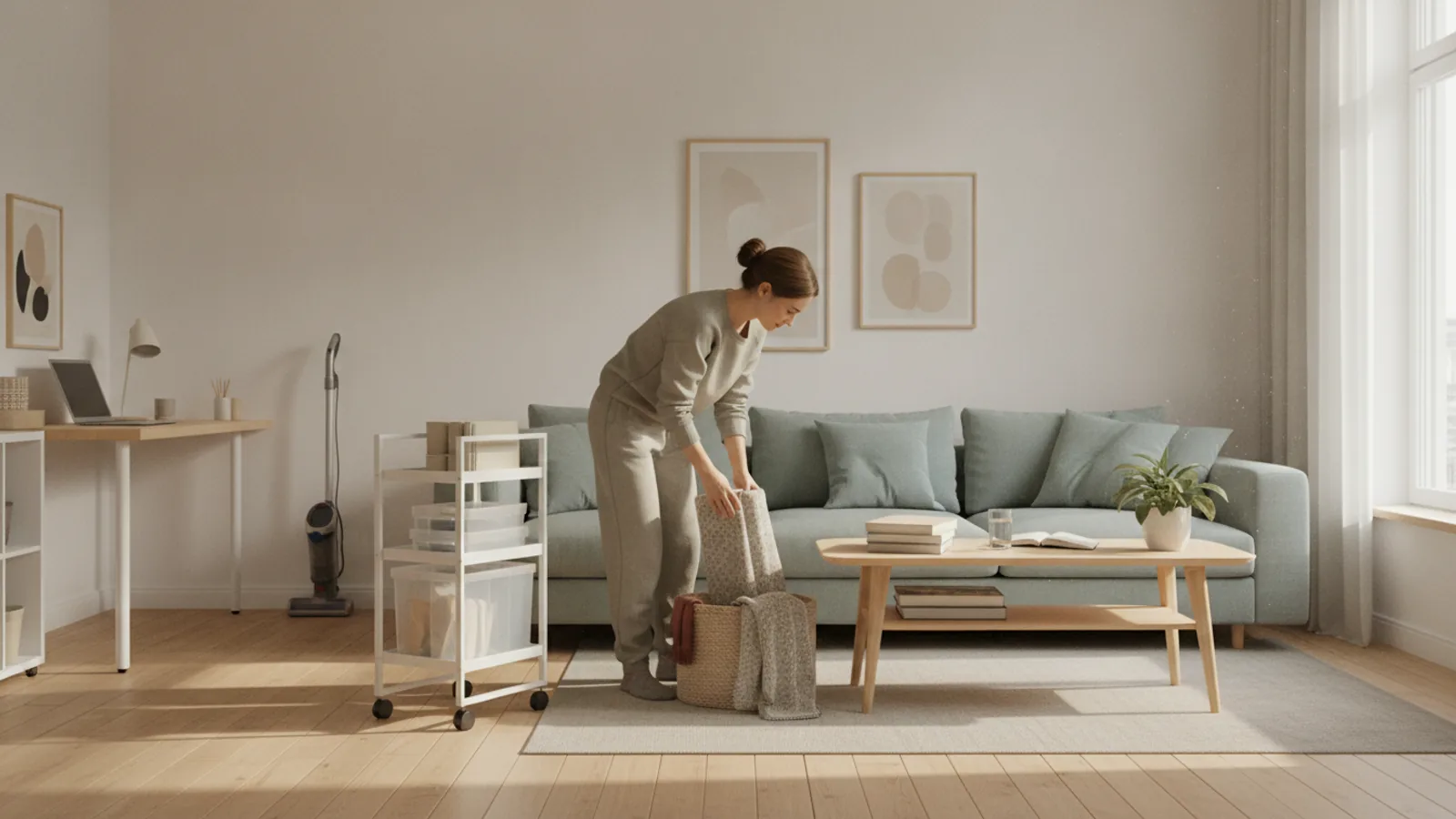
The living room is the heart of relaxation and often the catch-all for everyday clutter, so spend about fifteen minutes here. Stand in the doorway and scan the room for items out of place: remote controls, glasses, books, laptops, chargers, and stray clothing. Pick up each item and decide in seconds: put it back where it belongs, or drop it in the basket for later. Use a remote caddy or a small tray on a side table to hold remotes, and stack magazines and books neatly on shelves or in a basket. Fluff the sofa pillows and straighten the throw blankets. Wipe down side tables, the coffee table, and the TV stand with a microfiber cloth and all-purpose cleaner. Check the floor for crumbs or pet hair and sweep or vacuum the main traffic areas. Verify that you have at least one clear path from the doorway to the other side of the room, free of obstacles. This matters because a calm living area invites you to relax, and it makes it easier to vacuum or clean later by having clear surfaces.
Finish with a Floor Sweep and Room-by-Room Check
The final ten minutes are about finishing strong. Take the laundry basket and walk through each room you've reset, checking for any items you missed and putting them in their proper places. Return the basket to its storage spot. Sweep or vacuum the floors in the entryway, kitchen, bathroom, and living area, since these are the high-traffic zones. If you have a lightweight vacuum, quickly do the whole house; otherwise, a broom and dustpan work fine. After cleaning, step back and do a visual check: are the counters clear? Is the bathroom vanity tidy? Are the floors free of crumbs? Additionally, run a final wipe over the kitchen sink and bathroom sink drain to remove toothpaste residue or coffee stains. Finally, reset the timer for a two-minute timer and challenge yourself to walk through the entire home, picking up any stray item you see and placing it in a designated spot. This matters because a thorough final pass ensures that no room gets neglected and that you end the reset with a satisfying sense of completion.
Quick Reference
| Situation | Action | Why it helps |
|---|---|---|
| You find a pile of mail and papers on the kitchen counter every day. | Place a labeled tray or file organizer on the counter, and during your reset, sort each piece into three piles: keep, recycle, or shred; then file the 'keep' pile in the tray. | Having a designated spot and a quick sorting routine prevents papers from becoming a visual and mental burden, and it makes it easy to find important documents later. |
| Morning rush is stressful because you can't find your keys or phone in the entryway. | Hang a small hook rack by the front door and attach a key holder or small bowl to it; make it your habit to place keys and phone there every time you enter the house. | A fixed landing spot removes the frantic search that wastes precious minutes and sets a negative tone for the entire day, reducing stress and increasing reliability. |
| You notice that your bathroom counter accumulates lots of personal care bottles, making the space feel crowded. | Reduce it to only your daily-use items, like toothbrush, toothpaste, and a small cup, and store the rest in a cabinet or caddy under the sink. | Fewer items on the counter mean less visual clutter and easier cleaning, which keeps the bathroom appearing fresh with only a quick wipe. |
Common Issues
- You run out of time before finishing all the rooms, leaving the house half-reset.: Shorten the reset by focusing only on the entryway, kitchen, and bathroom for that week, and do a quick visual tidy of the living area without deep cleaning. Put a note on your calendar to do a full reset next week. This preserves your feel of accomplishment.
- You find yourself doing a deep cleaning task, like scrubbing the oven, which derails the reset.: Remind yourself that the reset is only for everyday surfaces, and schedule deep cleaning tasks separately on a monthly basis. If you feel the urge to scrub a stain that would take more than two minutes, write it on a separate 'deep clean' list and move on.
- Items that don't belong in a room keep reappearing, creating a pile in the laundry basket that you don't know what to do with.: After the reset, make it a rule to put away the basket items immediately within 24 hours. Use a timer for this step too. If the basket is overflowing, go through it now and put away items room by room, but keep it short—no more than ten minutes.
Advanced Tips
- Create a 'reset playlist' of upbeat songs that lasts exactly 60 minutes; when it ends, you stop, no matter what's left.
- Assign a specific day and time for your reset, like Sunday 5 PM, and set phone alarms with the label 'reset start' and 'reset end' for a consistent trigger.
- After three consecutive weeks, conduct a 'home audit' by walking through each room with a notepad and writing down any recurring troubles, then adjust your reset to target them first.
Final Checklist
- Timer set for 60 minutes and supplies (caddy, basket, wipes, trash bags) gathered near the front door.
- Entryway clear of shoes, jackets, and mail; door handle wiped, and floor swept.
- Kitchen counters clear and wiped; dishes put away; stovetop and microwave clean; floor swept.
- Bathroom counter clear to daily-use items only; mirror and toilet wiped; floor swept; fresh towel hung.
FAQ
How is a weekly home reset different from a full deep clean?
A weekly reset focuses on restoring daily surfaces and clearing clutter in high-use rooms, and it usually takes about 60 minutes. A deep clean tackles hidden grime, like scrubbing ovens, washing windows, and dusting high shelves, and it happens less often, maybe monthly or seasonally. The reset keeps your home consistently comfortable, while deep cleaning makes it truly spotless.
What if I don't have time to do the entire reset in one sitting?
Break it into two 30-minute sessions on different days, or choose the two most important rooms and do them twice, such as kitchen and bathroom one day, then entryway and living area the next. The key is consistency: schedule it weekly, even if you only do a portion, so the habit sticks. If you do the same rooms each week, they stay generally tidy.
How can I make sure my family helps with the reset instead of undoing it?
Share the reset schedule with your family and assign specific tasks, like clearing the coffee table or putting away shoes. Use a simple rule: everyone does a 10-minute 'reset blitz' each evening to put away their own personal items. Then the weekly reset becomes the final polish, not a massive cleanup by one person.