How To Compare Options For A Small Hallway That Works Harder Without Feeling Crowded
A practical step-by-step guide to how to compare options for a small hallway that works harder without feeling crowded, including preparation, instructions, common issues, tips, and next steps.
How To Compare Options For A Small Hallway That Works Harder Without Feeling Crowded
Transform a narrow hallway from a forgotten pass-through into a functional, welcoming space without making it feel cramped. This guide helps you compare storage, seating, lighting, and decor options by focusing on depth, scale, and multi-purpose pieces. You'll learn to measure your space, set priorities, test installations, and avoid common mistakes like bulky furniture or dark colors. With careful planning and a few strategic choices, your hallway can work harder—providing storage, a drop zone, and a warm first impression—while still feeling open and airy. Follow the step-by-step comparison process to select pieces that fit comfortably, serve multiple roles, and enhance the light and flow of a small corridor.
Fast Answer
- Measure your hallway's width, length, and ceiling height first, focusing on the required clearance: you need at least 36 inches of walking space in high-traffic areas, but for a cramped hallway, target 30 inches if absolutely necessary, and always keep door swings and transitions in mind.
- Choose a maximum of two furniture pieces for the entire hallway. A slim console (less than 12 inches deep) with wall-mounted shelves above, or a narrow bench with a mirrored cabinet, provides function without stealing floor space.
Before You Start
- Gather a tape measure, a notebook, a camera, and a level. You'll also need painter's tape for marking floor and wall areas during the test.
- Clear the hallway completely to get an accurate sense of its true size and light. Remove rugs, furniture, and any wall hooks temporarily.
- Measure the width, length, ceiling height, and note any architectural features like doors, light switches, or radiators. Record these dimensions on a simple sketch.
- Take photos from both ends and directly in front of any potential furniture spots. You'll refer to these when comparing virtual options later.
Step-by-Step Instructions
Measure Your Hallway and Define the Required Clearance
Start by measuring the exact width, length, and ceiling height of your hallway. Record these numbers on your sketch. Then, identify the absolute minimum clear walking width you need: ideally 36 inches, but if you have a truly tiny entry, you might manage with 30 inches in the tightest spot. To test this, use painter's tape on the floor to outline the furniture footprint you're considering, then walk through the space. Make sure you can comfortably carry groceries or a laundry basket without hitting the walls or doors. Also, open every door (including closets and room doors) fully to see if the furniture interferes. This step is crucial because it defines the maximum depth and width of any piece you can add without turning your hallway into an obstacle course. Once you know your clearance, you can set a hard limit on furniture depth—typically no more than 10 to 12 inches for a console or bench. Remember, you need to account for the door swing radius and allow a buffer zone of at least 2 inches on each side of the furniture to avoid scrapes and to let the space feel open. This practical check ensures you don't accidentally buy something that blocks the flow, which is the most common mistake in small hallway design.
List Your Hallway's Functional Needs and Prioritize
Before comparing specific products, write down every way you currently use your hallway. Are you dropping keys and mail the moment you enter? Do you need a place to sit while putting on shoes? Is there a spot for outdoor gear like coats and umbrellas? Do you need to hide dog leashes or sports equipment? Rank these needs from 'must-have' to 'nice-to-have'. For example, if you bump into a pile of shoes every day, a slim bench with shoe storage underneath becomes a top priority. If you never use the hallway for sitting, skip the bench and choose a wall-mounted fold-down table instead. This step is about deciding which functions will make your hallway work harder. You only have room for one or two pieces, so every item must earn its place. Write down your top three needs, and use that list as a filter when you look at any option. If a piece doesn't satisfy at least one of those needs, cross it off. This approach prevents you from being distracted by a beautiful but useless decor item. Also consider the traffic pattern: if people pass through quickly, prioritize clear paths over extra storage. By ranking your needs, you ensure that the furniture you choose truly improves daily life, not just the look.
Compare Storage Solutions: Slim Consoles vs. Wall-Mounted Shelves
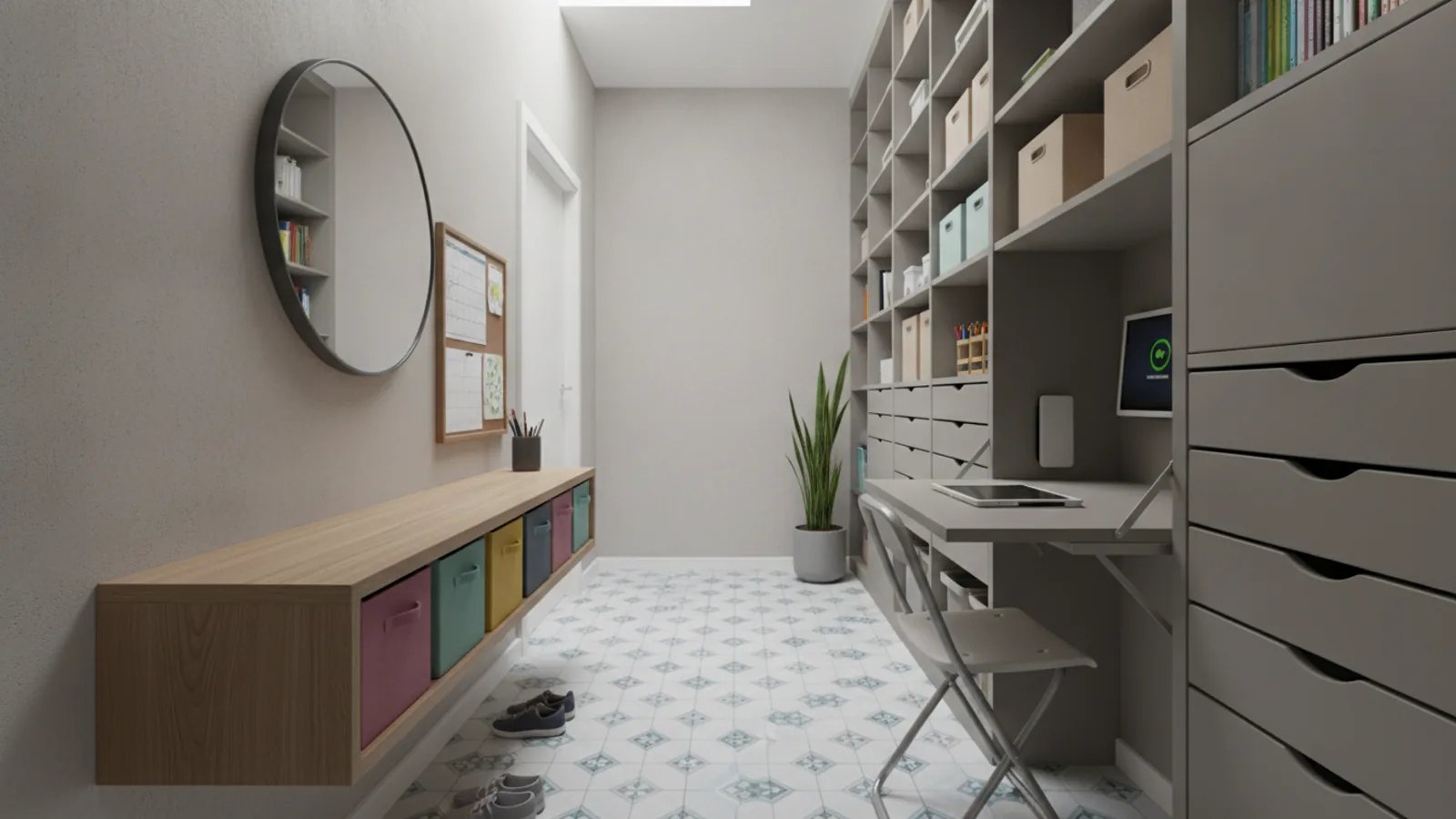
Now, focus on the two most common hallway storage options: a slim console table and wall-mounted shelves. A slim console typically has legs and a top surface, and it can include drawers or lower shelves. It offers a natural spot for a lamp, bowl for keys, or framed photos. Its depth should be 8 to 12 inches to keep the walkway clear. Wall-mounted shelves, on the other hand, take up zero floor space, which makes the hallway feel instantly wider, but they require sturdy wall mounting and may not suit renters. Compare how much hidden storage you need: if you need to hide the clutter, a console with drawers or baskets on shelves is better. If you prefer a minimalist look and have a plain wall to mount shelves, they can hold decorative items plus hooks underneath for coats. Check the weight capacity of the shelves and ensure they are mounted into studs. Also, think about visual weight: a console with legs gives an airy feel, while a solid, floor-to-ceiling cabinet might feel oppressive. For a small hallway, you usually want a floating effect, so a wall-mounted shelf or a console with tall, thin legs works best. Test the footprint using cardboard, and see how the piece affects the light and openness. Remember, the best option is one that provides storage without making the hall feel like a closet.
Evaluate Seating Options: Benches, Stools, and Fold-Down Seats
If you need a place to sit while lacing up boots or signing for a package, you have several space-saving choices. A compact stool (around 15 inches high) can sit flush against a wall and be tucked under a console when not in use. A slim bench (12 to 14 inches deep) offers seating plus a place for a basket underneath, but it can block the path if too wide. A fold-down wall seat (also called a flip-down seat) is mounted to the wall and folds up when you don't need it, preserving floor space entirely. When comparing these, measure the seat height (around 18 to 20 inches is comfortable for most adults) and the clearance in front of it: you need at least 30 inches to sit without hitting the opposite wall. Also, consider how often you'll use the seat: if it's daily, a sturdy fold-down model makes sense; if it's occasional, a slim bench that doubles as a shoe rack might be better. Test the depth by sitting on a stack of books or a milk crate to feel the comfort level. Additionally, think about who uses the seat: if a child or elderly person needs it, a bench with a backrest is safer. Always check the weight rating on fold-down seats, especially if you plan to use it for more than just perching.
Assess Lighting and Mirror Options to Enhance Spaciousness
Good lighting is key to preventing a small hallway from feeling like a cave. Compare overhead fixtures, wall sconces, and table lamps (if you have a console). Overhead lights can be warm and dim, but a hallway often needs bright, even light. Wall sconces at eye level (around 60 inches from the floor) provide task lighting and can highlight artwork. A mirror is also a great tool: a large mirror reflects light and visually doubles the space. When comparing, decide where the mirror will go: across from a window or light source, it will bounce light around. For a narrow hall, a vertical mirror (tall and slim) can make the ceiling feel higher. Alternatively, a full-length mirror on the back of a closet door is space-free. Check the color temperature of your bulbs: warm whites create a cozy feel, while cool whites feel brighter and more like daylight. Also, consider adding a dimmer switch for flexibility. When comparing fixtures, think about the visual clutter: a big chandelier might feel overwhelming, while a flush-mount fixture blends in. The goal is to layer light from at least two sources: ambient (overhead) and task (sconce or lamp). This combination makes the hallway feel open and welcoming.
Test the Layout and Finalize the Comparison
Before making a purchase, set up a full-scale mock-up of your chosen layout. Use blue painter's tape to outline the furniture footprints on the floor, and hang empty cardboard boxes or paper cutouts at the correct height for wall-mounted items. Walk through your daily routines: come home with an armful of groceries, open the front door, talk on the phone while leaning against the wall. Notice if you ever bump into the outlined shapes. Also, test how it feels to sit on a mock bench (a stack of sturdy boxes) or place items on a mock console. Take photos and compare them with photos of the empty hallway to judge the visual impact. This step is your final check before spending money. If anything feels cramped, go back and re-evaluate: maybe the piece is too deep, too wide, or too tall. Consider swapping a console for a shelf, or a bench for a fold-down seat. Once the layout feels right, order the actual pieces and install them. After installation, live with it for a week. If you find yourself avoiding the hallway or tripping over something, make adjustments. The ultimate test is whether the hallway functions smoothly and feels inviting.
Quick Reference
| Situation | Action | Why it helps |
|---|---|---|
| You need to store shoes but have only a shallow wall space (less than 12 inches deep). | Install a wall-mounted shoe rack with angled slots that keep shoes off the floor, and add a small fold-down seat for convenience, if you can spare the floor space. | This maximizes storage without eating into your walkway, because wall-mounting uses zero floor depth. |
| Your hallway gets direct sunlight in the afternoon and feels like a greenhouse. | Choose a light-colored, heat-resistant material for furniture, and hang sheer, light-filtering curtains or a solar film to diffuse the heat. | Light colors reduce absorbed heat, and sheer fabrics or films cut glare and UV damage without darkening the space. |
| You often drop keys and mail on a console, but the surface becomes cluttered. | Add a wall-mounted key rack with small hooks and a tray, and place a pretty dish for rings, so everything has a designated spot. | Designated landing zones prevent items from piling up, making the hallway feel organized and spacious. |
Common Issues
- Hallway furniture blocks part of a doorway or prevents the door from opening fully.: Measure the door swing (the arc it needs) and mark it on the floor. Choose furniture that sits away from that arc, or select a piece that is slimmer than the door swing clearance. Consider a wall-mounted shelf instead of a floor console.
- Wall-mounted shelves fall because they weren't secured to studs.: Always use a stud finder to locate wall studs, and anchor screws directly into them. If you cannot find studs, use heavy-duty toggle bolts rated for the weight of your items. Check the manufacturer's load limit and never exceed it.
- The hallway still feels narrow even after you add a slim bench and mirror.: Reassess the color scheme: paint the walls a light, cool color like pale gray or soft blue. Replace heavy, dark floor mats with light, low-profile runners. Also, reduce visual clutter by removing extra decor or combining multiple small items into one tray.
Advanced Tips
- Add a vertical strip of peel-and-stick LED lights along the baseboard to create a subtle glow that visually lifts the floor and makes the hallway appear longer.
- Install a magnetic strip on the inside of a cabinet or door to hold small metal tools like scissors, tweezers, and extra keys, freeing up drawer space.
- Use a slim rolling cart that can be tucked under a console and pulled out as an extra prep station when you have guests, then rolled back out of sight.
Final Checklist
- Measure your hallway width and walking clearance at the narrowest point, and keep it at or above 30 inches if possible.
- Prioritize your needs: list the top three functions you want the hallway to serve, and choose furniture that fulfills at least one.
- Furniture depth should not exceed 12 inches, and wall-mounted options can make the space feel airier.
- Test your layout with tape and cardboard before buying, and walk through daily tasks to ensure nothing blocks the path.
FAQ
Is it better to use a bench or a chair in a narrow hallway?
In a narrow hallway, a bench is usually better because it can be pushed against the wall and takes up a long, low footprint. A chair, even a slim one, has a back and arms that make it feel more intrusive. If you truly need a seat, choose a wall-mounted fold-down seat that tucks away when not in use, or a very slim stool that can be tucked under a console.
What is the maximum depth for hallway furniture to avoid feeling cramped?
A good maximum depth for hallway furniture is 10 to 12 inches. If you go deeper, you'll start to infringe on the walking path, especially if your hallway is less than 5 feet wide. Always subtract the furniture depth from your hallway width to see what remains. For example, if your hallway is 40 inches wide and you introduce a 12-inch-deep console, you'll have 28 inches of clear space—which is tight but possible. If you can find a piece that is 8 inches deep, it will feel much more open.
Can I use a tall bookcase in a small hallway for storage?
A tall bookcase can be useful if you have vertical space and a very small footprint, but it can also make the hallway feel closed in. The key is to choose a model that is narrow (under 18 inches wide) and to anchor it securely to the wall, especially if you have children. Also, consider a bookcase with doors or baskets to reduce visual clutter. If you need floor-to-ceiling storage, a custom-built unit with flush doors is a better option than a bulky free-standing case.